
First finger foods for your baby: what to offer at 6 months (and how to make them safe)
If your baby is around 6 months old and ready to start solids, one of the first questions you're probably asking is: what finger foods can I actually give my baby?
It's one of the most common things parents ask me- and the good news is that getting started with finger foods is simpler than you might think. As a paediatric dietitian (and a mum who's been there), here's my guide to the best first finger foods, and my quick go-to method for making sure they're safe.
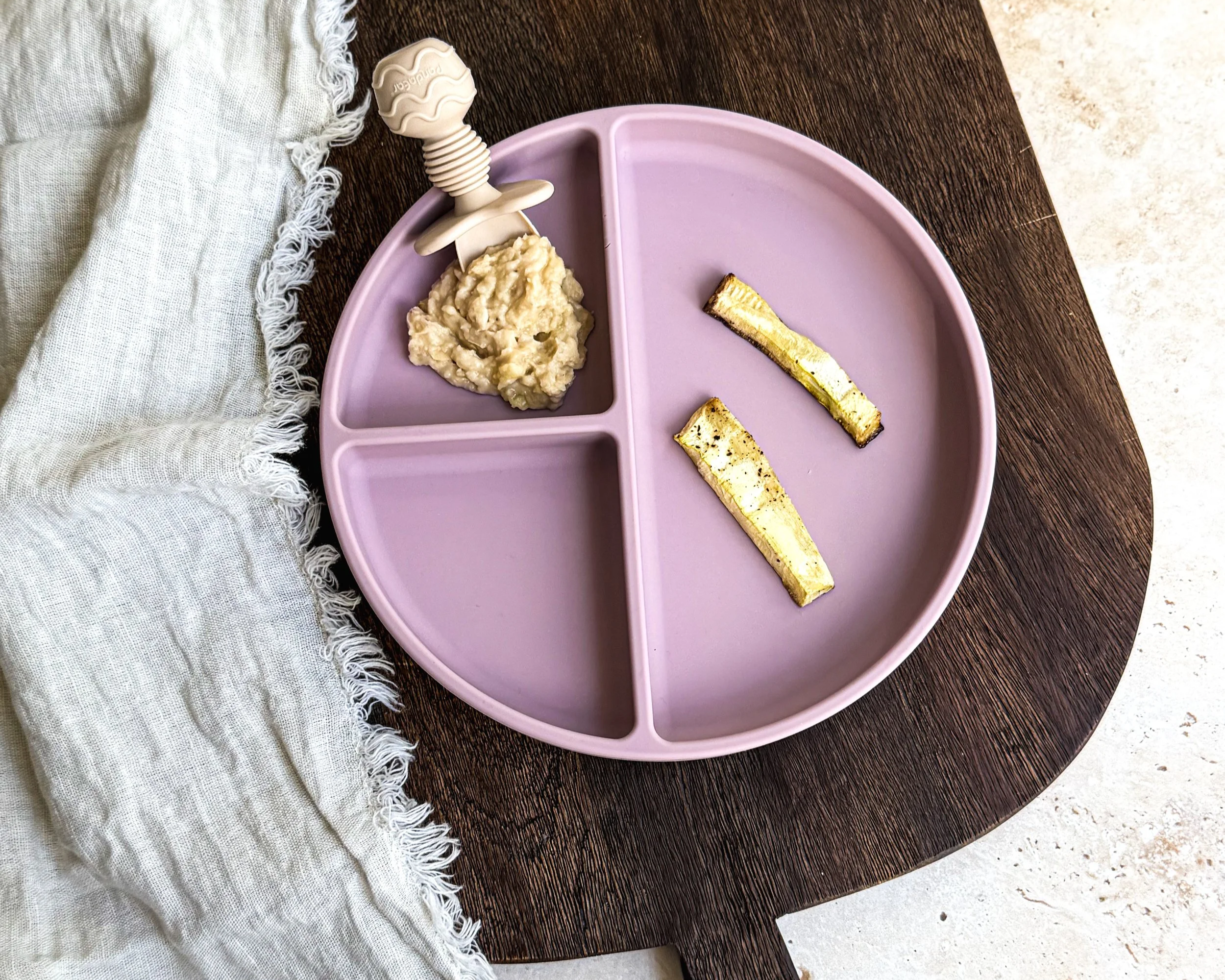
What are ‘finger foods’?
Finger foods are simply pieces of food your baby can pick up and feed themselves. They're a brilliant way for babies to explore different textures, develop their coordination, and build confidence with eating - whether you're doing baby-led weaning, purees, or a mix of both.'
At around 6 months, babies are just developing the skills to grasp food and bring it to their mouths, so the key is offering soft foods in shapes they can hold.
The best first finger foods for a 6 month old
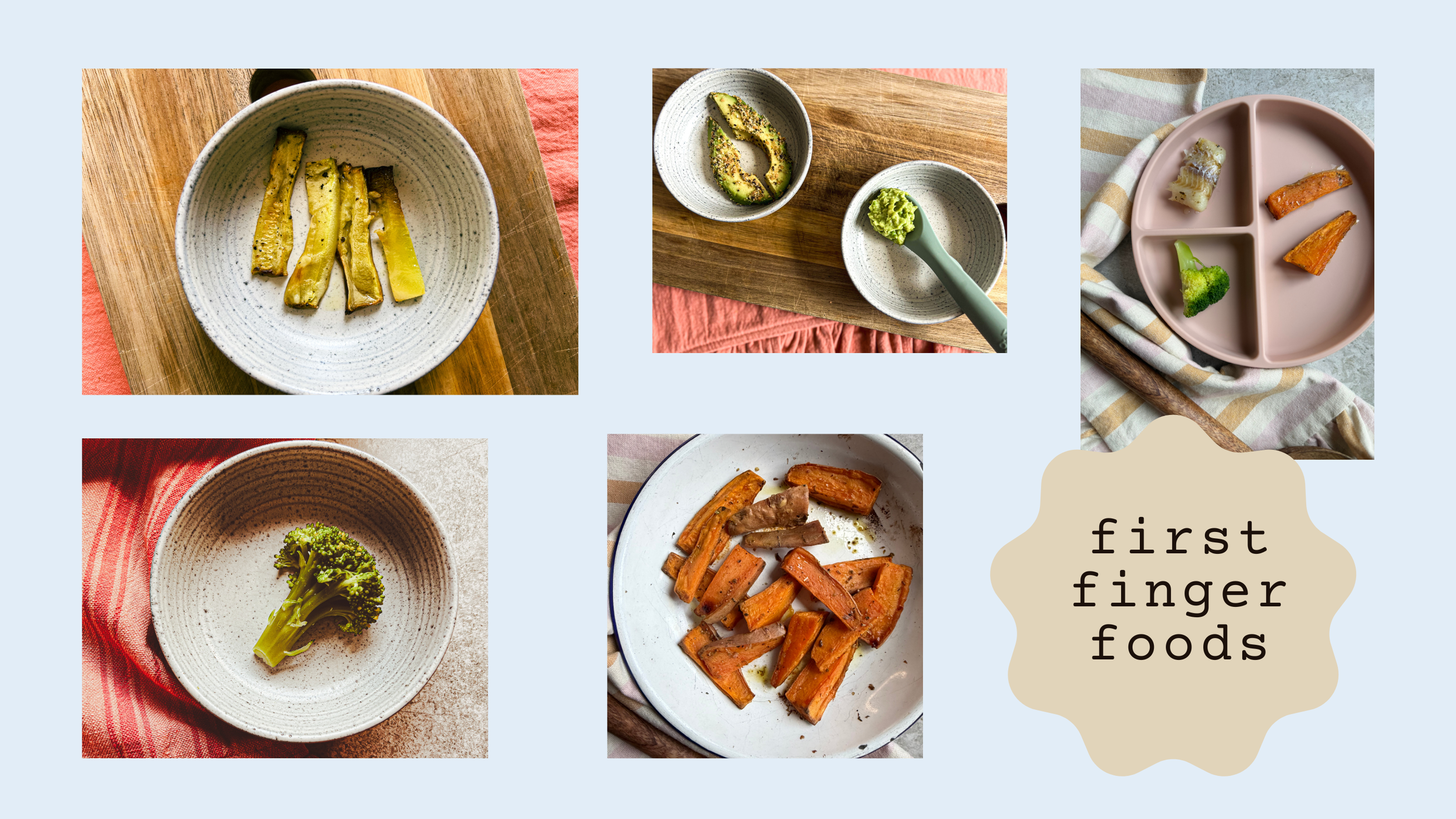
In the early days, simple is best- soft foods in shapes your baby can grip. Here are some lovely first finger foods to get you started:
Veggies
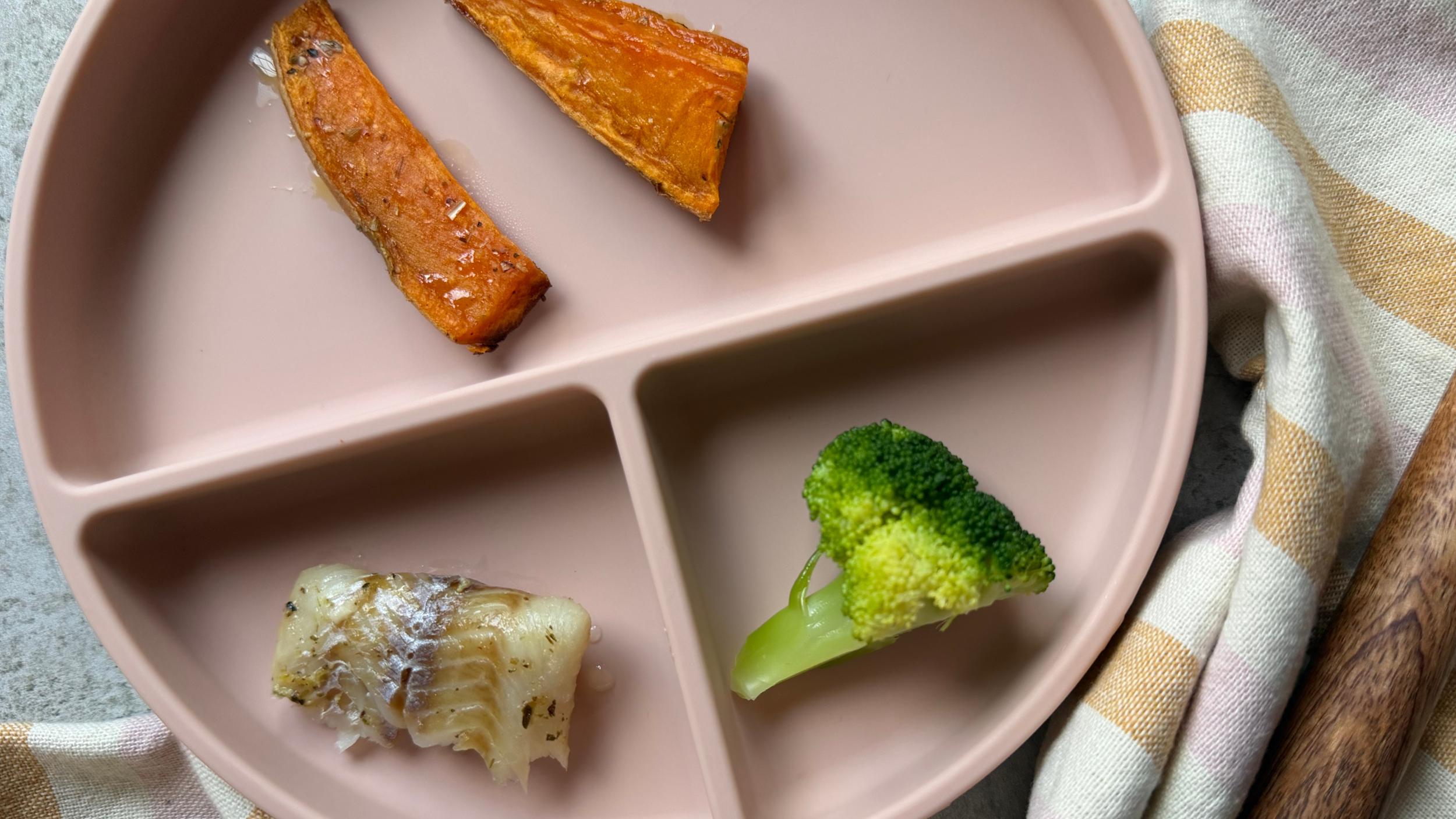
Steamed or roasted broccoli and cauliflower florets (the natural "tree" shape is perfect for little hands)
Roasted sweet potato wedges, skin off
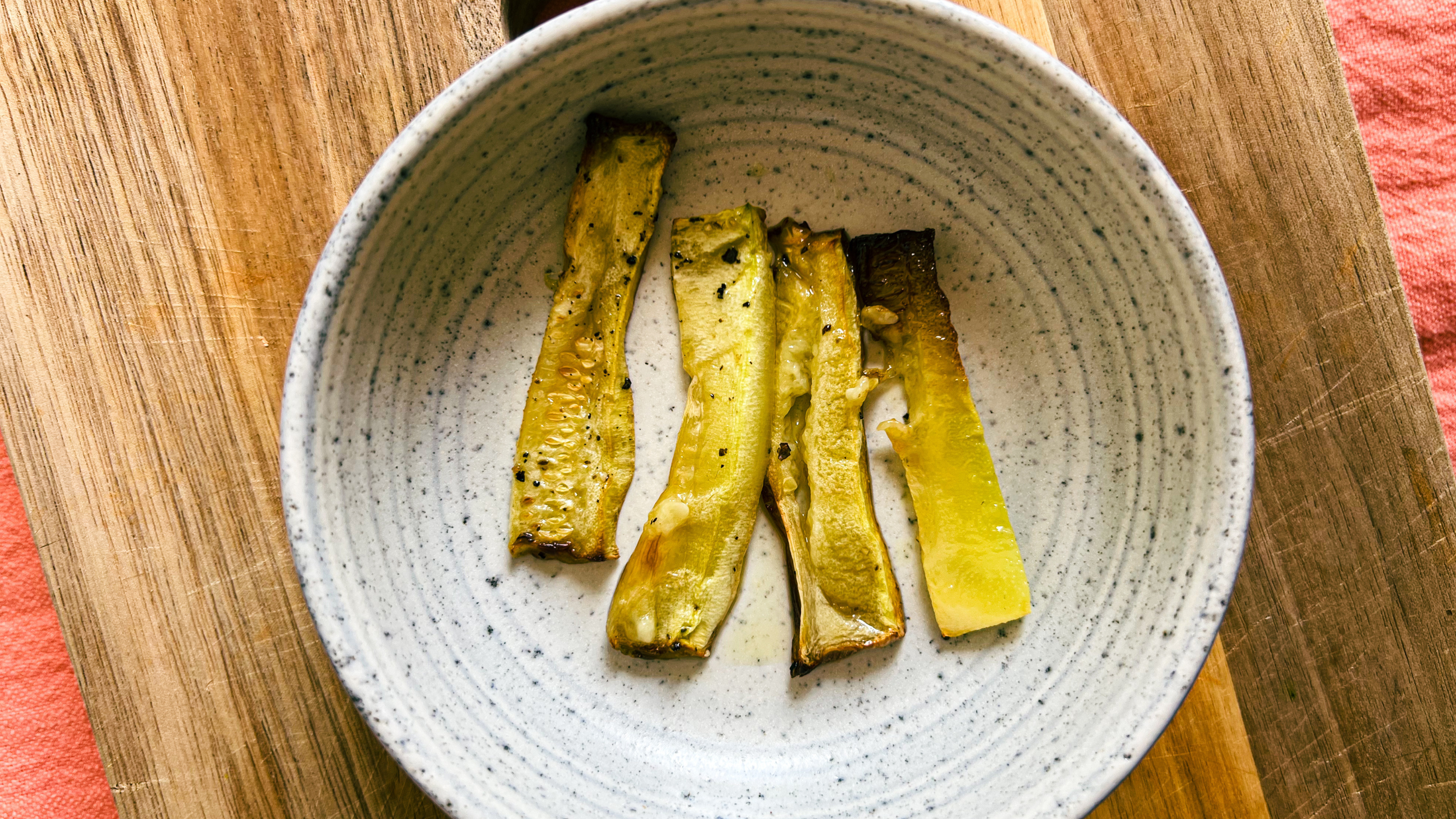
Roasted courgette fingers, skin off initially
Soft avocado fingers (try dipping in ground seeds, ground nuts or desiccated coconut for grip)

Protein and iron-rich foods
Cooked, deboned soft flakey fish like cod, haddock or salmon (low mercury)
Eggs boiled and sliced into quarters, or an omelette cut into fingers
Soft, slow-cooked shredded meat, or larger pieces for easy grasp (no small hard chunks or grizzly bits)
Cooked ground meat made into soft meatballs or patties, served in appropriate way
Fruit
Banana, sliced lengthways (try dipping in ground seeds or nuts for grip)
Soft ripe peeled pear or peach, sliced
Half a large ripe strawberry or apricot
Soft carbs and more
Wholegrain toast fingers with smooth diluted nut butter or smooth hummus
Porridge fingers (porridge baked or microwaved, then sliced)
Homemade pancakes or French toast fingers (I have lots of recipes in my happy weaning series cook books)
How to cut food for baby-led weaning?
The ideal shape for a 6 month old is around the size of 1-2 adult fingers held together- long enough for your baby to grip with a bit poking out the top of their fist, since they can't yet use the pincer grasp to hold small bits of food. Instead, they use something called a ‘palmer grasp’.
How to check a finger food is soft enough for a baby: the squish test
To check whether a finger food is soft enough for your baby, you can use the squish test.
Simply squish a piece of the food between your thumb and forefinger using gentle pressure. If it squishes easily, it's probably soft enough for your baby to manage with thier gums.
If it's firm or hard, it probably needs more cooking (or a different preparation) before you offer it to them
A note on common choking hazards in babies
The squish test is a brilliant everyday tool, but it works alongside knowing the common choking hazards. Some foods need preparing in a specific way or avoiding completely in the early days
Whole grapes and cherry tomatoes should be cut lengthways into quarters, and avoided until at least 9/10 months
Whole nuts aren't suitable for babies and toddlers, only offer smooth nut butter or ground nuts instead
Raw hard fruit and veg (like apples and carrots) should be cooked until soft or grated
Round, firm foods should always be avoided or blended/grated/cut to remove the choking risk
Always stay with your baby while they're eating, sit them upright (never reclined), and never leave them alone with food.
It's also well worth doing a paediatric first aid course before you start- for your own peace of mind.
Just to say…
Starting finger foods doesn't have to be daunting. Offer soft, adult finger-sized pieces and use the ‘squish test’ to check texture, and always avoid the common choking hazards as finger foods. Before long your little one will be grabbing, gumming and exploring food with both hands!
Want more simple, no-overwhelm guidance for starting solids? Come and say hi on Instagram @thehappyfeedingcompany, where I share recipes, tips and real-life baby + toddler feeding content.
And if you'd like the complete roadmap- from first foods right through to toddlerhood, with over 140 recipes- take a look at my happy weaning series. It's everything I wish I could hand every parent at the start of their weaning journey.