
How to cut finger foods safely for babies (6 months, 9 months and 12 months+)
Written by Christina Hills, Baby + Child Dietitian, and Starting Solids expert. Founder of the Happy Feeding Company Clinic.
At around 6 months, babies can bring food to their mouth and chew using their gums, but they don’t have a mature pincer grasp or a fully developed rotary chew. By 9 months, they begin to pick up smaller pieces, and by 12 months+ they can usually manage more varied textures.
Our job is to offer foods that match their oral-motor skills while reducing choking risk as much as possible. Read on for my expert tips on how to do this safely…
How to offer finger foods for babies at 6 months
At this stage babies use their whole hand to grab food (palmar grasp). They need foods that meet the finger food 5:
👌🏻Soft and squishable between your thumb and fore-finger so baby can easily break the food down with their gums
✋🏻Large ideally bigger than babies palm size (or the size of your index finger) so they can grab with palms and bring to mouth
🥦Whole foods like well cooked veg and ripe fruit
🌰 No large pips/stones/seeds/nuts
🥩No small round, slippery or hard chunks like tough bits of meat or whole cherry tomatoes
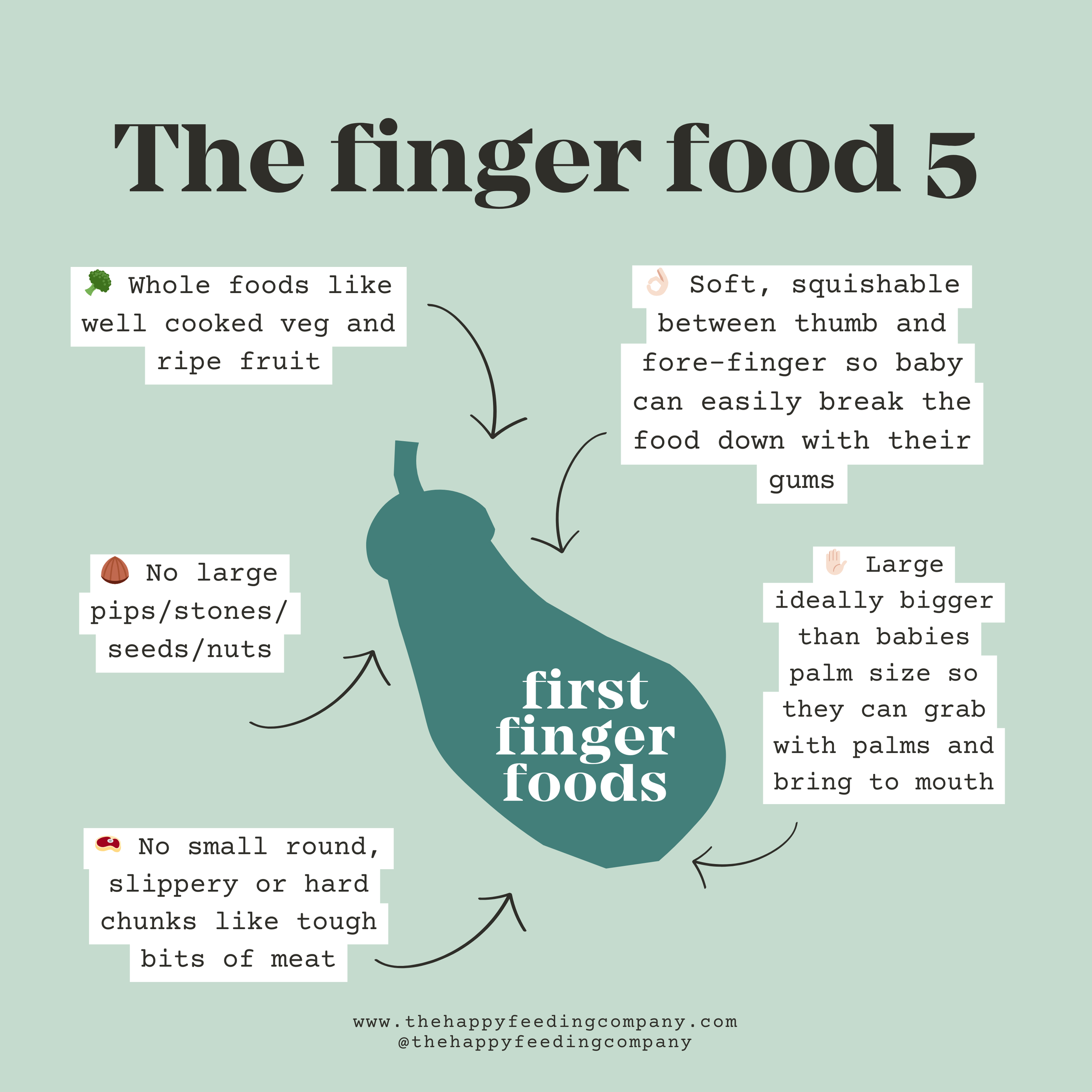
Check out my blog post on the finger food 5
Examples of safe finger foods
Avocado: thick ripe wedges
Banana: peeled and cut into large batons
Steamed veg: carrot batons, courgette halves, broccoli florets (stalk long enough to hold)
Soft ripe fruit: ripe peach or pear slices, very ripe watermelon strips
Protein foods: shredded chicken, slow-cooked meat, large flakes of fish, omelette strips
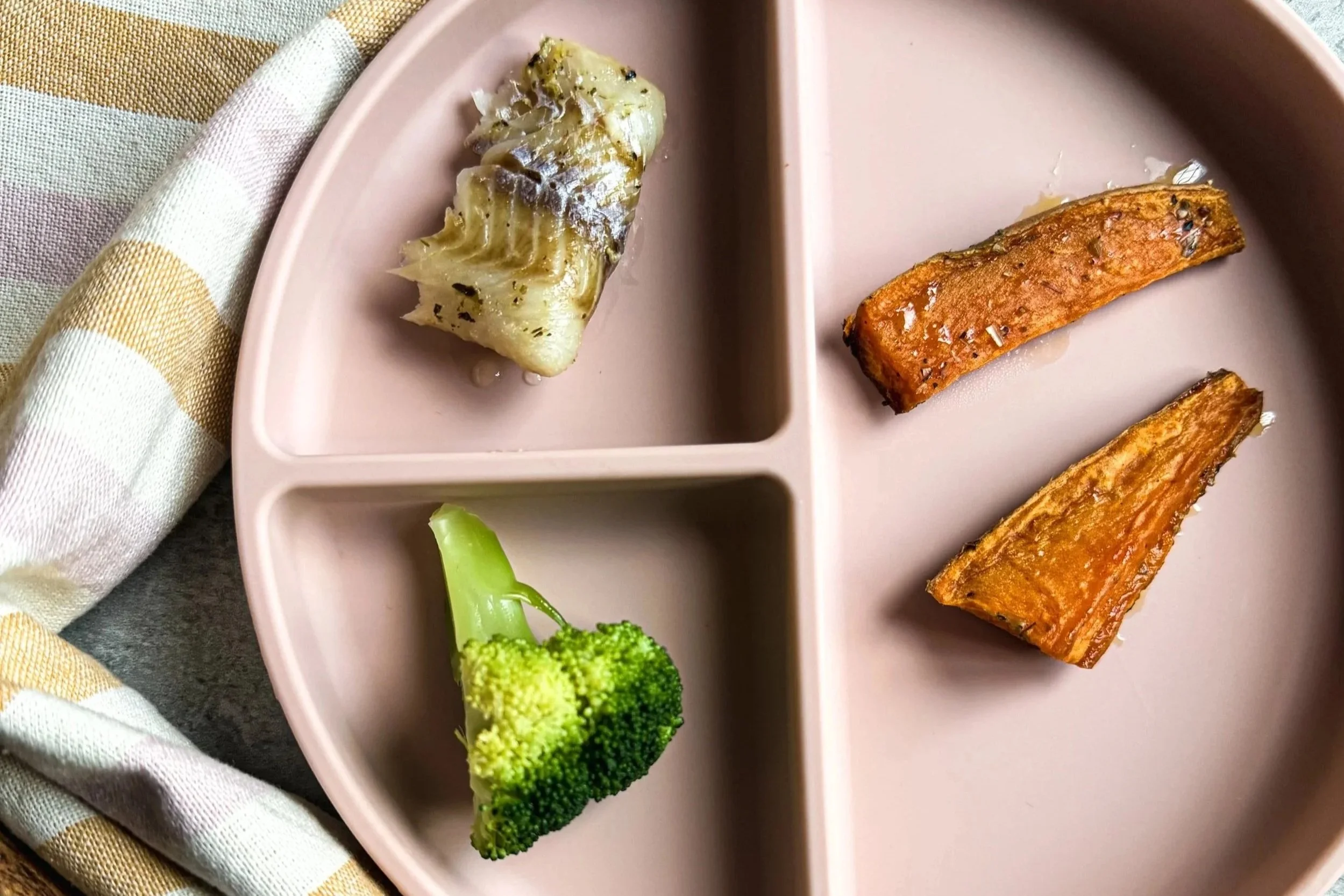
Example of finger foods suitable for 6 month+ baby
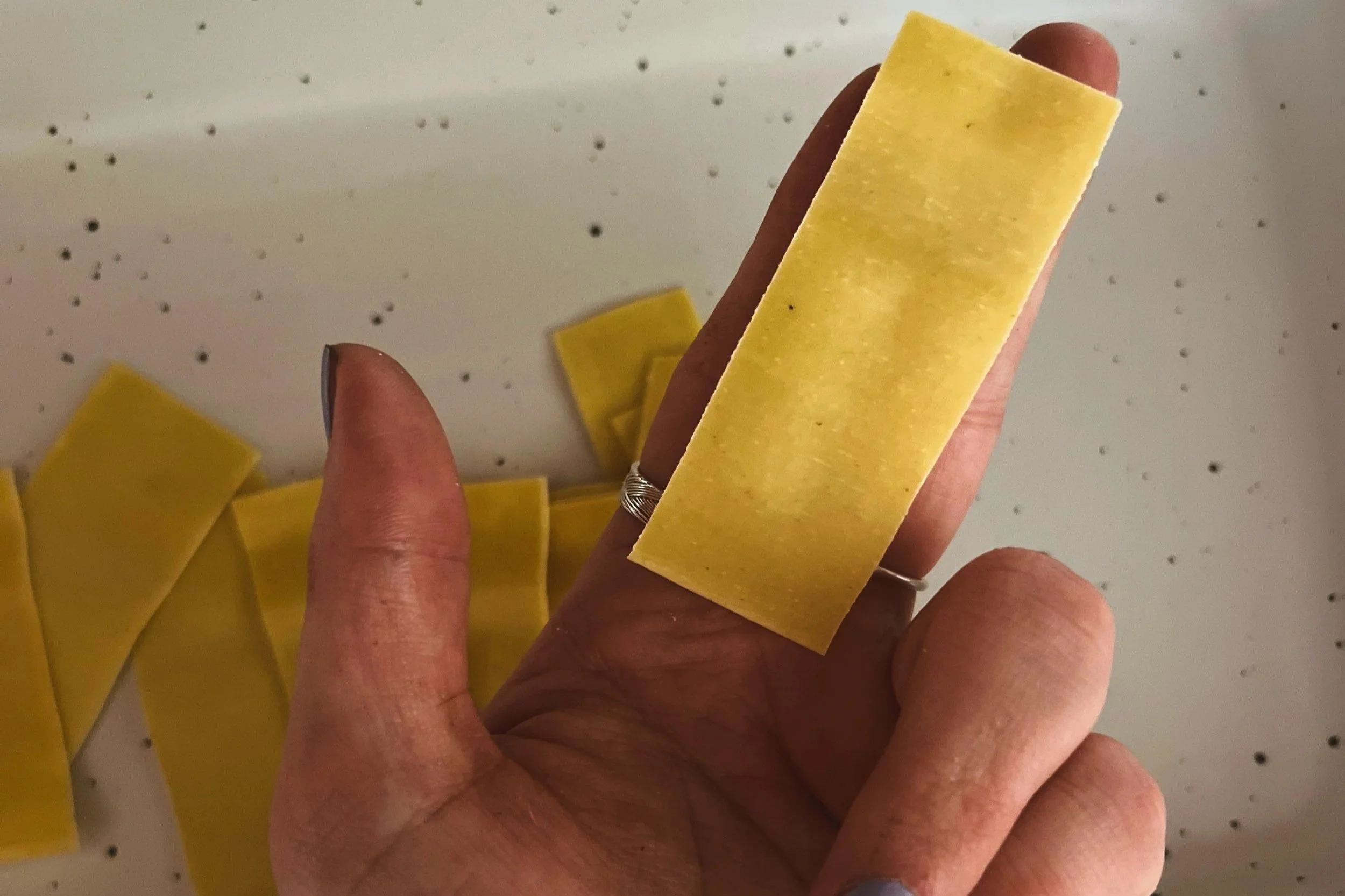
Pasta cut to the right size to be given as a finger food for a baby 6-7months+
Foods to avoid 6 months+
Any small / small pieces of food (smaller than babies palm)
Whole cherry tomatoes or grapes (always offer halved lengthways)
Raw apples/carrots
Tough meat
Whole nuts or popcorn
Hard, round, sticky foods
Large pips/stones/seeds/nuts
Also, check out my blog post on gagging vs choking when feeding your baby
How to offer finger foods for babies at 9 months+
Fine motor skills have improved, and many babies are starting to use a pincer grasp. We can now introduce smaller pieces while still prioritising softness and avoiding tough to chew or ‘hard’ foods.
Examples of safe preparation of finger foods
Soft fruits: cut into small pieces, such as smaller pieces of ripe pear, peach, strawberries and plum
Cooked veg: small cubes or thin half-moons
Pasta: small shapes like macaroni or orzo can now be picked up
Toast: cut into bite-size squares
Beans/chickpeas/blueberries: mashed/squished
Cheese: small thin strips or grated
Foods to avoid 9 months+
Whole cherry tomatoes or grapes (always offer halved lengthways)
Raw apples/carrots
Tough meat
Whole nuts or popcorn
Hard, round, sticky foods
Large pips/stones/seeds/nuts
How to offer finger foods for babies at 12 months+
Now we begin to move closer to “family food” with more mixed textures. Babies can chew more effectively but still require modifications to reduce choking risk.
Examples of safe preparation of finger foods
Grapes/cherry tomatoes: continue cutting grapes and cherry tomatoes lengthways
Meat: bite-sized tender/soft pieces can be offered, minced dishes, shredded chicken
Raw veg + hard fruit: continue to offer thin slices or grated (apple, carrot)
Sandwiches: small fingers or squares
Family meals: chopped to manageable size; continue to avoid very hard, round or sticky items
Foods to avoid 12 months+
Whole cherry tomatoes or grapes (always offer halved lengthways)
Whole pieces of raw apples/carrots
Tough meat
Whole nuts or popcorn
Hard, round, sticky foods
Large pips/stones/seeds/nuts
Adapting family meals for babies
Weaning should be fuuuuun and a time to introduce a baby to the delicious food that you eat as a family! So here are my top tips for adapting home cooked family meals to make them baby safe:
⚡️Think texture: finely chopped or mashed food OR large soft finger foods that meet the finger food 5 for babies 6 months+
Adjust texture + shape based on age
6m: larger, soft strips
9m: small, soft bites
12m+: chopped family portions
Modify choking risks
Halve grapes + cherry tomatoes
Avoid whole nuts; use finely ground or nut butters
Thinly slice raw veg or soften through light steaming
No hard, round, sticky foods
No large pips/stones/seeds/nuts
⚡️Don’t be afraid of flavour: babies can handle spices, fresh chopped herbs, mild chillies, ginger, garlic, lemon, lime……. You name it! Babies have one of the most adaptable palates and are in a unique window of opportunity to accept new tastes and flavours. Try letting them suck on a lemon or lime wedge of have a taste of your favourite curry sauce
*make sure there are no pips in the lemon/lime wedge first (suitable from around 6 months)
⚡️Go easy on salt, stocks and gravies: use them in moderation (unless they are low salt/ home made versions)
⚡️Avoid adding sugar in cooking where you can: it can mask the natural flavours of food which babies are just getting used to! And no honey until 12 months due to very rare cases of botulism toxicity.
⚡️Cook from scratch where you can, batch cook and freeze extra portions: babies only eat a very small amount at first so little ice cube trays or small plastic/ silicone pots will do. Even the last bits of a pan can be scraped into a freezer pot!
⚡️Embrace “deconstructed” meals
Instead of a chicken curry: offer shredded chicken, soft rice, veg pieces in curry sauce
Instead of a stir fry: soft veg strips, noodles chopped-up, flaked fish/tofu strips
If you’d like a personalised weaning plan or support navigating feeding confidence, allergies, or adapting meals for your baby, my virtual clinic is open and designed to guide you every step of the way.